Grilled pizza: the flip-and-top method on gas or charcoal
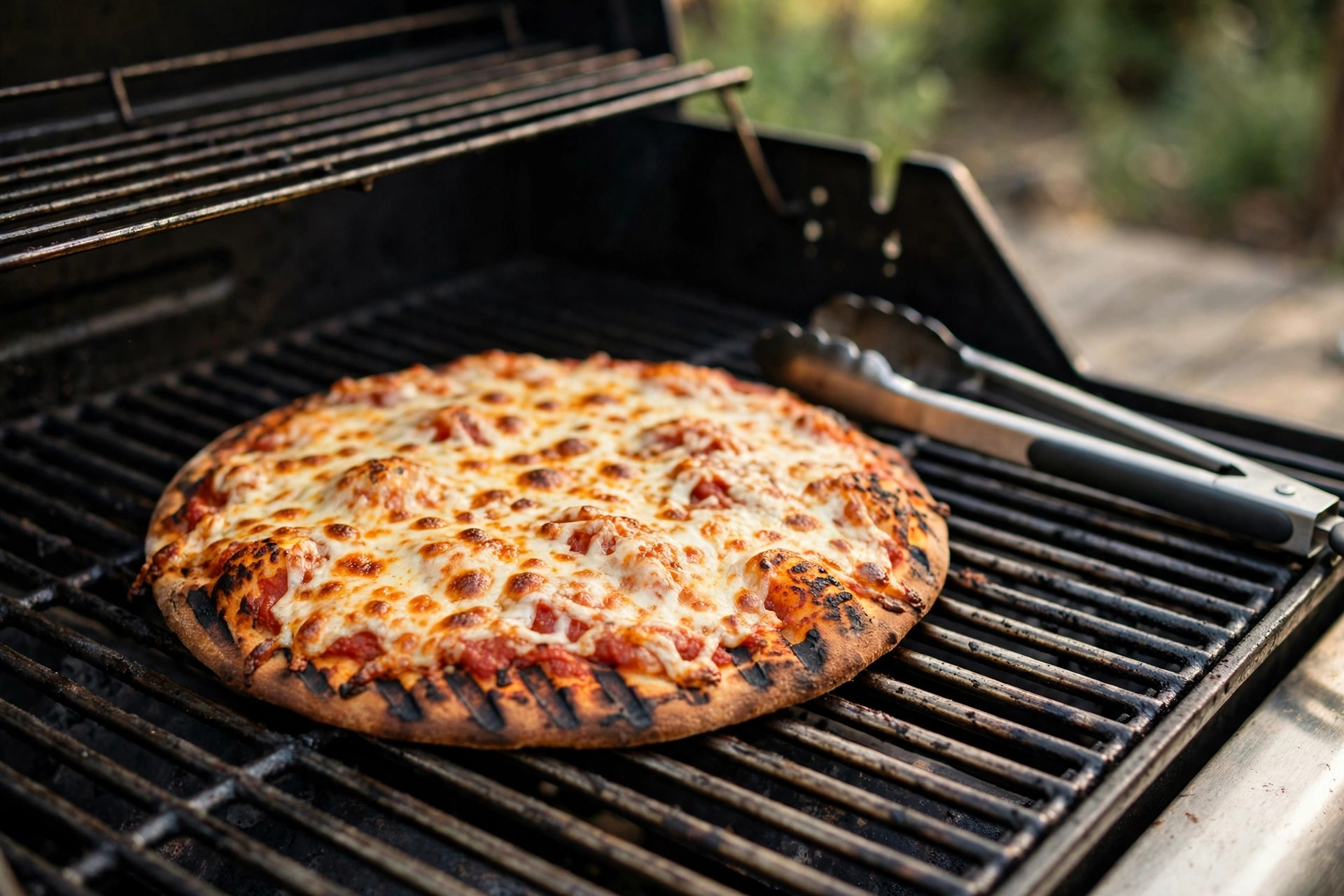
Grilled pizza works because a grill solves the home oven’s two problems at once: it gets genuinely hot, and it cooks the dough from below with direct heat while the closed lid traps enough ambient heat to melt cheese. It also introduces a problem ovens never have — the dough starts raw, wet, and floppy, and the cooking surface is a set of bars with gaps between them. The method that handles all of this is the flip-and-top: the dough grills naked first, gets flipped onto its cooked side, and is topped on the grill, in that order. Every published version of grilled pizza is a variation on that sequence, and the differences between them are worth understanding before the grill is lit, because once the dough goes down there is no pausing.
Two ways to grill a pizza, compared
| Method | How it runs | Trade-off |
|---|---|---|
| Directly on the grates, flip-and-top | Dough oiled and laid straight on hot grates; 2–3 minutes until golden with grill marks; flipped, topped on the cooked side, finished 3–5 minutes with the lid down | Best char and the true grilled texture; the flip and the topping happen against the clock, and the dough must be small and sturdy enough to handle with tongs |
| Stone on the grill, topped raw | Stone preheats on the grates for 10–15 minutes at around 500°F; the assembled pizza cooks on it for 10–15 minutes, lid down, usually over indirect heat | No flip and no race — the pizza is built on a peel like an oven pizza — but no grill marks, a paler bottom, and the stone must heat and cool gradually |
| Parchment-assisted direct grill | Dough rolled between parchment sheets, flipped onto the grates using the parchment, which is then peeled away; grilled 2–3 minutes, flipped, topped, 2–4 minutes more | The easiest launch for a first attempt and for very thin dough; one extra thing to manage at the grill, and the parchment comes off before any real char forms |
The comparison is this guide’s synthesis of the published methods cited in the sections below, checked on October 18, 2026. The direct method is the recommendation for most cooks because it is the only one that uses the grill as a grill rather than as an outdoor oven — but the stone method is the right call for a large pizza, a wet topping load, or a first attempt in front of guests, where the flip’s time pressure is a genuine liability.
Set up two zones before anything else
Grilling writers who teach this method converge on the same setup: two heat zones, a hot side and a cooler side, established before the dough is anywhere near the grill. On a gas grill that means one side at medium-high to high and the other at medium-low or off. On charcoal it means banking the hot coals to one side so the zones exist in the coal bed itself. One two-zone method targets about 450–500°F on the hot side, grills the naked dough there for 1–2 minutes, then flips it onto the cooler side for topping and a 3–5 minute lid-down finish — the cooler side is what lets the cheese melt fully before the bottom, already grilled once, has a chance to scorch. A single-zone grill at full heat gives the cook no such refuge, and it is the setup behind most burnt-first-attempt stories.
Temperature discipline matters at the modest end too. The Speckled Palate’s method preheats a gas grill to 450°F, allowing roughly 10 minutes for it, and cleans the grates with a grill brush once hot — a clean grate is not cosmetic here, because raw dough releases from a clean, oiled grate and tears on a dirty one. Oil goes on the dough itself in most published methods, brushed over the side that will face the grates; that oiled side goes down first.
Mise en place is not a suggestion
Every source method, whatever else it disagrees on, insists on the same preparation: all toppings measured, shredded, and arranged on a tray beside the grill before the dough is stretched. The reason is arithmetic. The naked dough needs 2–3 minutes; flipping takes seconds; and the topped pizza then needs its sauce, cheese, and toppings distributed in well under a minute so the second side does not overcook while the first toppings are still being fetched from the kitchen. Toppings should also be light and, for anything that cannot cook through in a few minutes over indirect heat, already cooked — the published BBQ chicken version of this method, for example, builds the pizza with shredded cooked chicken, corn, and red onion over barbecue sauce, and returns it to the grill only until the cheese melts. Raw sausage or thick raw vegetables do not finish in this method’s finish window.
Grilled pizza, step by step
One: set up two zones — gas burners at medium-high on one side and low or off on the other, or charcoal banked to one side — and preheat with the lid down to about 450°F, roughly 10 minutes on a gas grill. Two: brush the hot grates clean, and set the tray of measured toppings, tongs, and a peel or rimless sheet within arm’s reach. Three: stretch one 8-ounce dough ball, at room temperature, into a rustic round or oval of about 10–12 inches — smaller and slightly thicker than an oven pizza, so it handles well and does not sag between grates — and brush the top lightly with olive oil. Four: lay the dough oiled-side down directly on the hot-side grates, brush the new top with a little more oil, close the lid, and grill 2–3 minutes, until the underside is golden with grill marks and the top is bubbling. Five: flip the dough with tongs onto the cooler zone, grilled side up. Six: working quickly, spread a thin layer of sauce over the grilled side, add cheese and prepared toppings, keeping the load light. Seven: close the lid and cook 3–5 minutes more, until the cheese is melted and bubbly and the bottom is golden with noticeable grill marks. Eight: slide the pizza off with the peel or tongs, rest about a minute, then slice and serve; repeat with the remaining dough, letting the grill recover its heat with the lid down between pizzas.
What success looks like: a crust that is crisp and marked on both sides, supple rather than crackery in the middle, with cheese fully melted and edges lightly charred in spots. A bottom that blackens before the cheese melts means the pizza stayed over the hot zone for the finish — move it sooner. Dough that sticks and tears at the first flip was either under-oiled, put down before the grill reached temperature, or flipped before the first side had set; the first side is done when it releases easily, and forcing it earlier is the one unrecoverable error in the method.
FAQ
Will the dough fall through the grates? Not once the first side sets — which takes 2–3 minutes at 450°F. The practical protections are size and thickness: rounds of about 10–12 inches, stretched a little thicker than an oven pizza, bridge the grates without sagging, and the parchment-assisted variant in the comparison table removes the risk almost entirely for a first attempt.
Gas or charcoal — does it matter? The method is the same; the zone management differs. Gas zones are dialled in and hold steady, which makes the flip-and-top timing more predictable. Charcoal zones are built by banking the coals to one side before the grate goes on, and they fade over a long session, so charcoal suits a shorter run of pizzas.
Can the pizza be topped before it goes on the grill? Only in the stone-on-grill method, where the pizza is assembled raw on a peel and cooked 10–15 minutes on a preheated stone. In the direct method, topping raw dough is what traps moisture against the grates and prevents the first side from setting — the flip exists precisely so the toppings land on an already-cooked surface.
General cooking information only. Grills vary widely in heat output; judge each stage by the stated visual checks — grill marks, release, melted cheese — rather than by time alone. Keep hands, tongs, and trays clear of the grate area, and never leave a lit grill unattended.