Reheating leftover pizza: every method ranked for a crispy crust
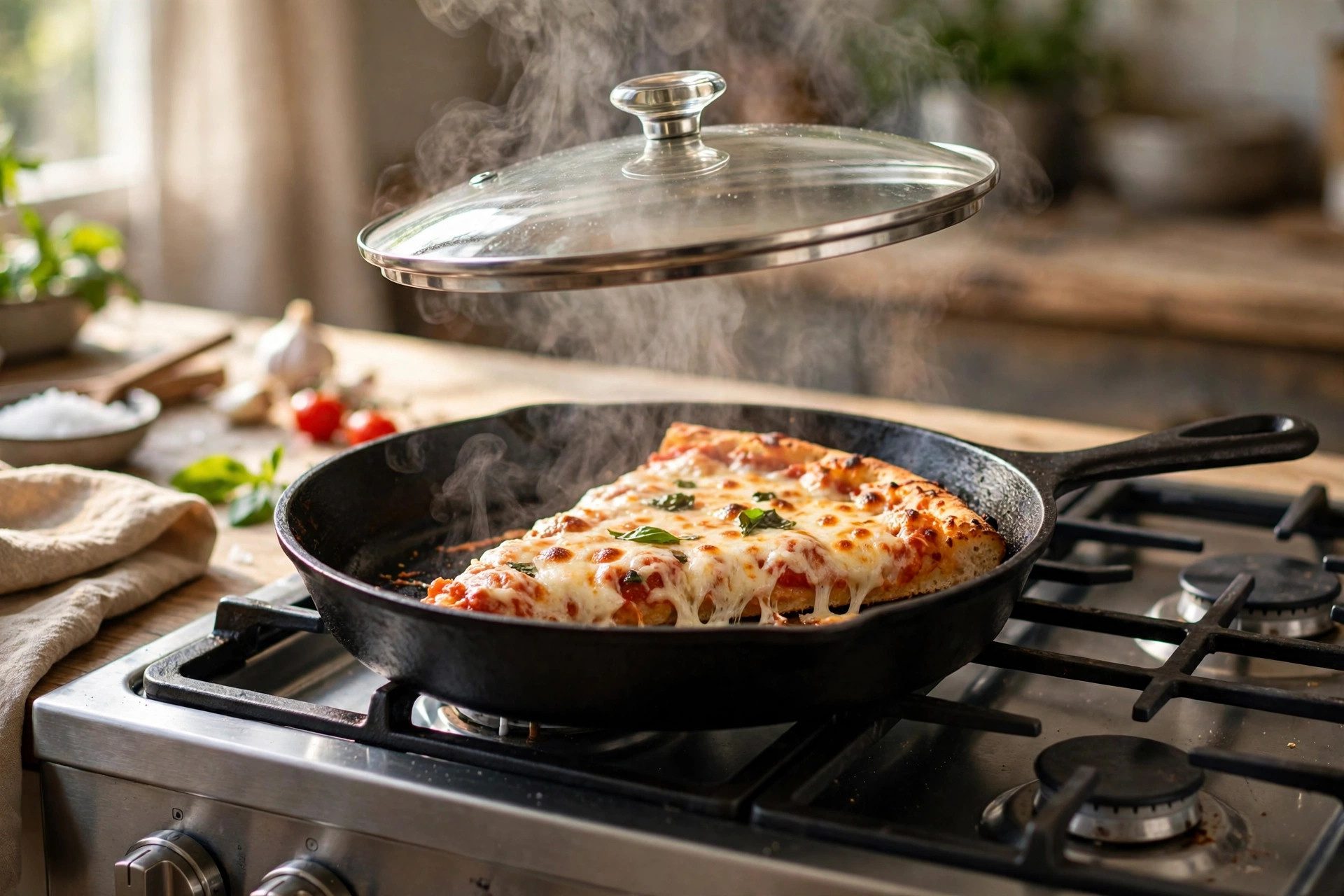
Day-old pizza is a gift — unless you reheat it wrong. The microwave turns the crust to rubber; a cold oven warms the cheese while the base stays limp. But every method works if you understand the one principle behind all of them, plus the storage step that has to happen first. Ranked below: six methods, with the temperatures, times, and trade-offs for each.
Before you reheat: storage and the room-temp rest
The reheat starts the night before. Per USDA food-safety guidance, leftover pizza keeps 3–4 days in the refrigerator — refrigerate it within 2 hours of serving, in shallow containers so it cools quickly. (Label the container with the date; memory gets generous after a busy week.) When reheating, the USDA target is 165°F at the center — cover the slices while reheating to help them heat all the way through.
One more step the guides skip: let cold slices sit at room temperature for 10–15 minutes before reheating. Room-temp pizza reheats more evenly than fridge-cold pizza, because the crust and toppings start the race from the same line. And only reheat what you'll eat — every reheat drives off more moisture, and twice-reheated pizza is a shadow of itself.
The one principle: heat the crust, not the air
The whole ranking comes down to one rule: anything that puts direct heat into the bottom of the crust works; anything that heats the air around the pizza does not. A skillet or a baking steel sears the base a second time. A sheet pan or a microwave warms the slice from the outside in and leaves the bottom soft. Keep the time short, too — long heat doesn't make a crust crispier, it just makes the cheese tough.
The methods, ranked
| Method | Temp | Time | Crust result | Best for |
|---|---|---|---|---|
| Skillet | Medium heat, dry pan | 2 min uncovered + 1–2 min covered | Crispiest base of any method | 1–2 slices |
| Baking steel/stone | 450°F | 4–6 min (30 min preheat) | Sears a second time, crisp to the center | Best overall result |
| Oven | 375°F | 8–12 min | Evenly crisp, holds well | 3+ slices or a whole pie |
| Air fryer | 350°F | 3–5 min | Very crisp edges, fast | Speed, 1–2 slices |
| Toaster oven | 350°F | 5–7 min | Crisp, no full preheat | 1–3 slices |
| Microwave | High | 20–30 sec | Soggy unless finished | Emergency only |
Step-by-step: the skillet-plus-steam method
The skillet wins for one or two slices. The full procedure:
- Heat a dry skillet over medium heat for 2–3 minutes. No oil — the crust has enough fat of its own. (Never use high heat; medium gives control and even heating.)
- Place the slice in the dry pan and cook uncovered for about 2 minutes, until the bottom firms and crisps.
- Add steam. Drip a few drops of water onto the skillet away from the pizza — not on the slice — and immediately cover with a lid. Steam for 30–45 seconds. The steam melts the cheese while the dry pan keeps the base crisp.
- Check and serve. Lift the lid: the cheese should be melted and the bottom audibly crisp. Eat immediately.
If you only have a microwave, there's a damage-control version: microwave at 50% power with a cup of water alongside the slice (the water absorbs some microwave energy and keeps the crust from going rubbery), then finish in a hot skillet, air fryer, or toaster oven for 1–2 minutes.
Thick crusts and special cases
Thick styles (deep dish, pan, Sicilian) are the exception to the skillet rule — the oven is the only method that heats them evenly all the way through. Use the oven at 375°F and give the slice more time than a thin one needs, covering loosely with foil to keep the top from drying while the center heats. For air fryers, keep slices in a single layer without overlapping, and expect the edges to dry slightly faster than the center.
What success looks like
A reheated slice should have a bottom you can hear when you set it down, cheese that's melted and flowing rather than rubbery, and a center that's hot all the way through — 165°F if you're checking. If the base is still soft, the method didn't put enough direct heat into the crust; next time, preheat longer or move up the ranking.